







































































A Complete Breakdown Of Travel Portal Development
The travel industry is becoming increasingly digital,and customers expect more than a basic website when booking flights,hotels,holiday packages,or other travel services. They want convenient searches,clear pricing,simple booking processes,secure payments,and reliable support throughout their journey. For travel agencies, tour operators,and entrepreneurs,meeting these expectations requires the right technology.
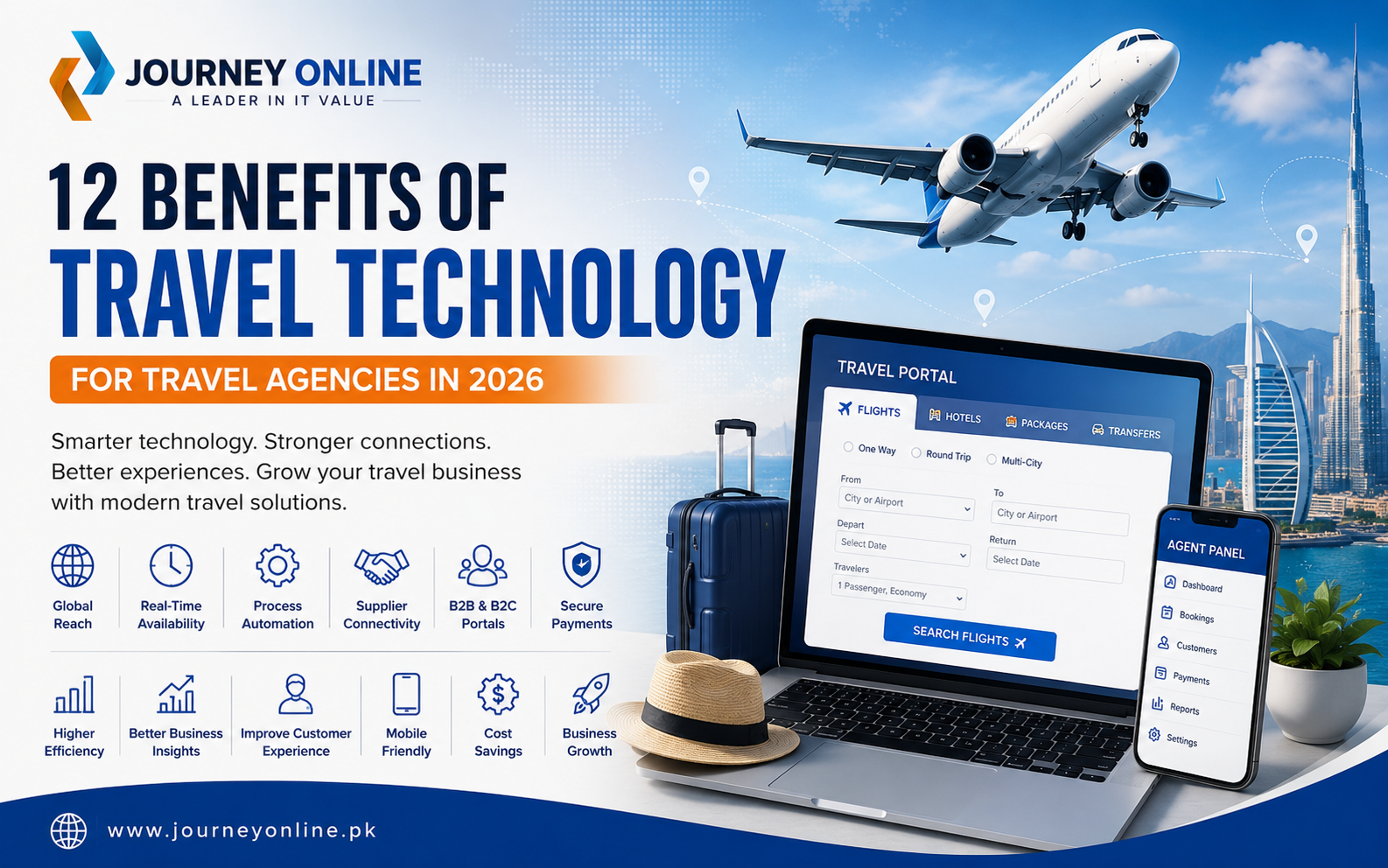
Travel portal development involves building an online platform that enables businesses to display travel services,manage bookings,connect with suppliers,and serve customers through a digital interface. Depending on the business model,a portal may support flight reservations,hotel bookings,Umrah packages,visa services,group ticketing,transport,and business-to-business travel distribution.
Journey Online provides travel technology solutions for businesses looking to establish or expand their digital operations. This guide explains how travel portals work,which features matter,what integrations are required,and how to choose the right development approach.

.jpg)
.png)